Can the Wrong Adhesive Lead to Denture Damage?
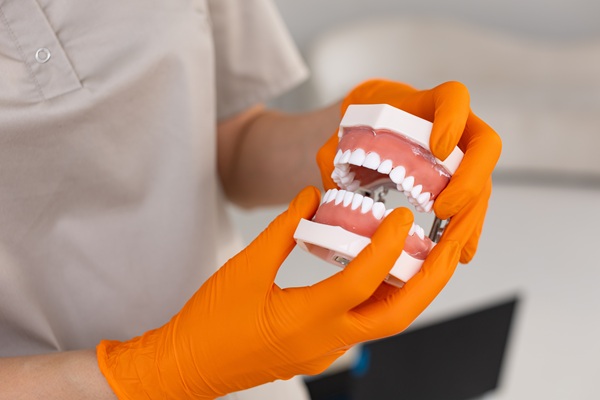
Are you looking for more information about denture adhesives? When you need to wear dentures so you can achieve good oral health, it is important to understand everything there is to know about dentures, including proper denture care. Denture care also includes potentially wearing denture adhesives.
An overview of denture adhesives
According to the Food and Drug Administration, in most cases, properly fitted and maintained dentures should not require the use of denture adhesives. However, that does not mean denture adhesives cannot be helpful to certain patients. While only some denture wearers need to use an adhesive, many choose to do so for some additional security, as they want dentures to stay on their own. There are a few different types of adhesives, such as gels, pastes, and powders.
How do denture adhesives work?
Denture adhesives work by applying the adhesive to the dentures and then placing the dentures on the gums. Adhesives make it so that the dentures stay more securely in place. This film of gel, paste, or powder creates a layer between the dentures and the gums, making it much more difficult for them to move or shift around in the mouth.
Who benefits from using adhesives?
When someone gets new dentures, and they fit properly, there is often little to no need for them to use any type of denture adhesive. However, if the patient's mouth begins to change, it may be in their best interest to consider using an adhesive to keep their dentures securely in place.
Changes within the mouth are considered normal when someone loses most or all of their teeth, as the tooth roots that fully support the jawbone are no longer there. Unlike dental implants, traditional dentures do not stimulate the jawbone, leading to oral and facial changes. Since dentures that do not fit properly can cause sore spots and even injury, many people use denture adhesives to keep them in place and prevent irritation.
Can the use of the wrong adhesive cause damage to dentures?
Not necessarily, denture adhesives are specifically made to be used with dentures, so, for the most part, they will not cause any damage to dentures. However, there are a few important things denture wearers should know before choosing to use an adhesive. They are as follows:
- Adhesives should be used according to instructions and in moderation.
- They also need to be completely removed from the dentures on a daily basis.
- When extended uses of adhesives are used, it is essential to undergo periodic assessments by a dental professional.
Can we help you?
Want to understand more about denture damage? The last thing you want to happen when you get new dentures is for them to somehow become damaged. Since it is possible to damage dentures, it is important to understand how to properly care for dentures so they will last for many years. Give us a call today so that we can help you with your dentures.
Request an appointment here: https://www.thesimplesmiles.com or call Simple Smiles at (423) 888-0204 for an appointment in our Johnson City office.
Check out what others are saying about our dental services on Yelp: Dentures and Partial Dentures in Johnson City, TN.
Recent Posts
Replacing missing teeth is about more than just aesthetics. It is about how you eat, how you speak, and how you feel in social settings. Fortunately, implant-supported dentures can replace teeth in a way that looks beautiful and feels natural. While traditional dentures have long been the standard, many patients eventually find themselves looking for…
Implant-supported dentures are an excellent choice for patients who want a durable and easy option for replacing lost teeth. This restoration allows patients to enjoy their favorite meals once again and go about their regular activities with the denture securely in place. There is no need to worry about the dentures slipping or coming loose…
Gaps in a smile can make everyday tasks like eating or talking uncomfortable. Fortunately, dental bridges remain a reliable dental restoration to replace missing teeth and restore your everyday chewing function. This guide provides the information you need about the four types of dental bridges and helps you choose the right option for your unique…
Are you experiencing dental pain? Recognizing when a root canal is required can be the difference between saving a natural tooth and needing a total extraction. If you are experiencing dental pain, understanding the following signs will help you decide when to seek professional care.One of the most prominent indicators of internal damage is persistent,…